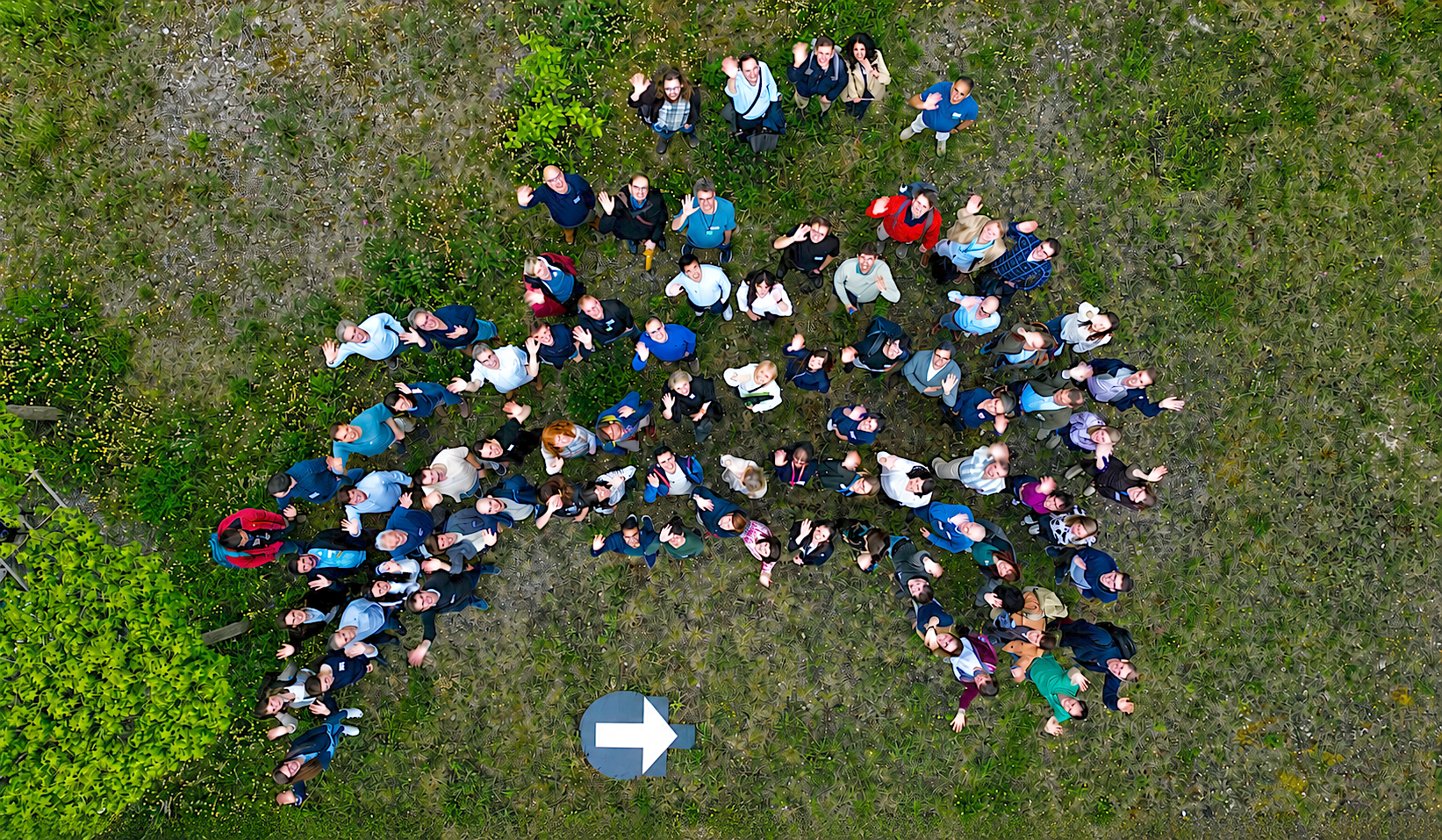
Muoniverse began operations in May as one of six newly funded National Centres of Competence in Research (NCCRs). The center quickly gathered momentum in its first weeks: recruiting PhD students and postdoctoral researchers, setting up a coordination office, appointing board members, holding a kick-off meeting, and launching the research projects at the heart of its program.

NCCR Muoniverse is jointly hosted by the Paul Scherrer Institute and the University of Zurich. At its core are muons—heavy, short-lived relatives of electrons—which can probe the properties of a remarkable range of systems, from advanced materials and electronic devices to elementary particles, archaeological artefacts and snow layers.
This technologically advanced and interdisciplinary research center is powered by its members. It requires a collaborative mindset and active participation to share technical expertise across fields and expand the use of muons as a research tool.
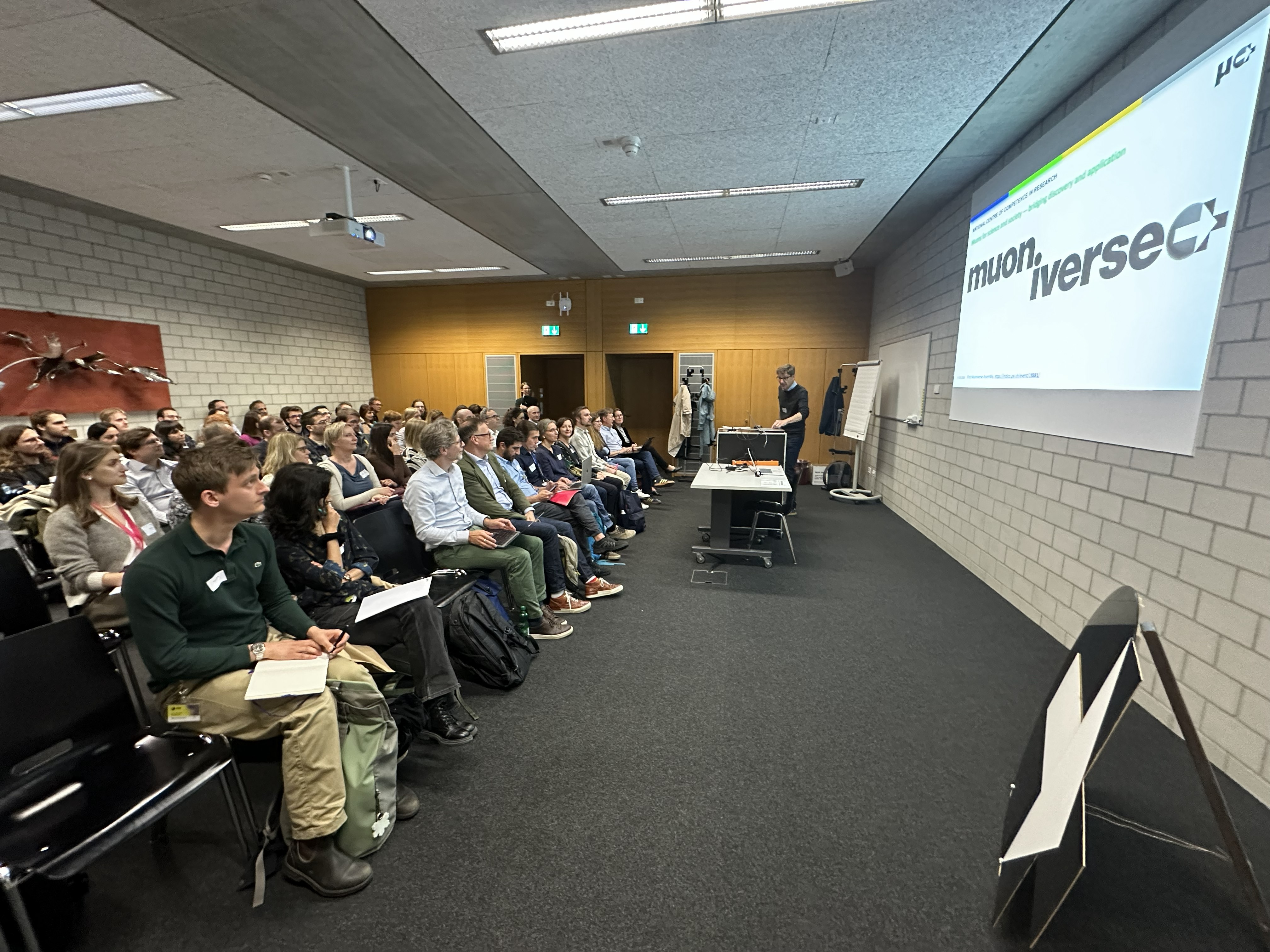
Muoniverse members readily demonstrated their enthusiasm for building a strong research community. On May 11, more than 80 participants from 11 institutions and across all career stages joined the kick-off meeting. “People came empowered to carry Muoniverse forward and take action in shaping this amazing research center,” says Titus Neupert, deputy co-director of Muoniverse and professor of physics at UZH.
Discussions focused on attracting and training young researchers, sharing expertise across research groups, opening the field to new applications, and fostering an inclusive environment. These exchanges led to the development of initial roadmaps for the center’s future activities.
“I am excited to see that we moved from ideas to implementation,” says Marc Janoschek, co-director of Muoniverse, head of the Center for Neutron and Muon Sciences at PSI and professor of physics at UZH. Participants left energized and ready to turn discussion intoaction. In the weeks that followed, focus groups developed concrete plans—from the first muon experiments that bring together researchers from differen tdomains and institutes, to advancing muon technology and applications. More immediate plans include a winter school to train and connect newly hired students and postdocs, and the Scientifica science festival to reach the general public.
It was an inspiring start for Muoniverse,and its members are looking forward to the work ahead.
NCCR Muoniverse is funded by the State Secretariat for Education, Researchand Innovation SERI and the Swiss National Science Foundation.