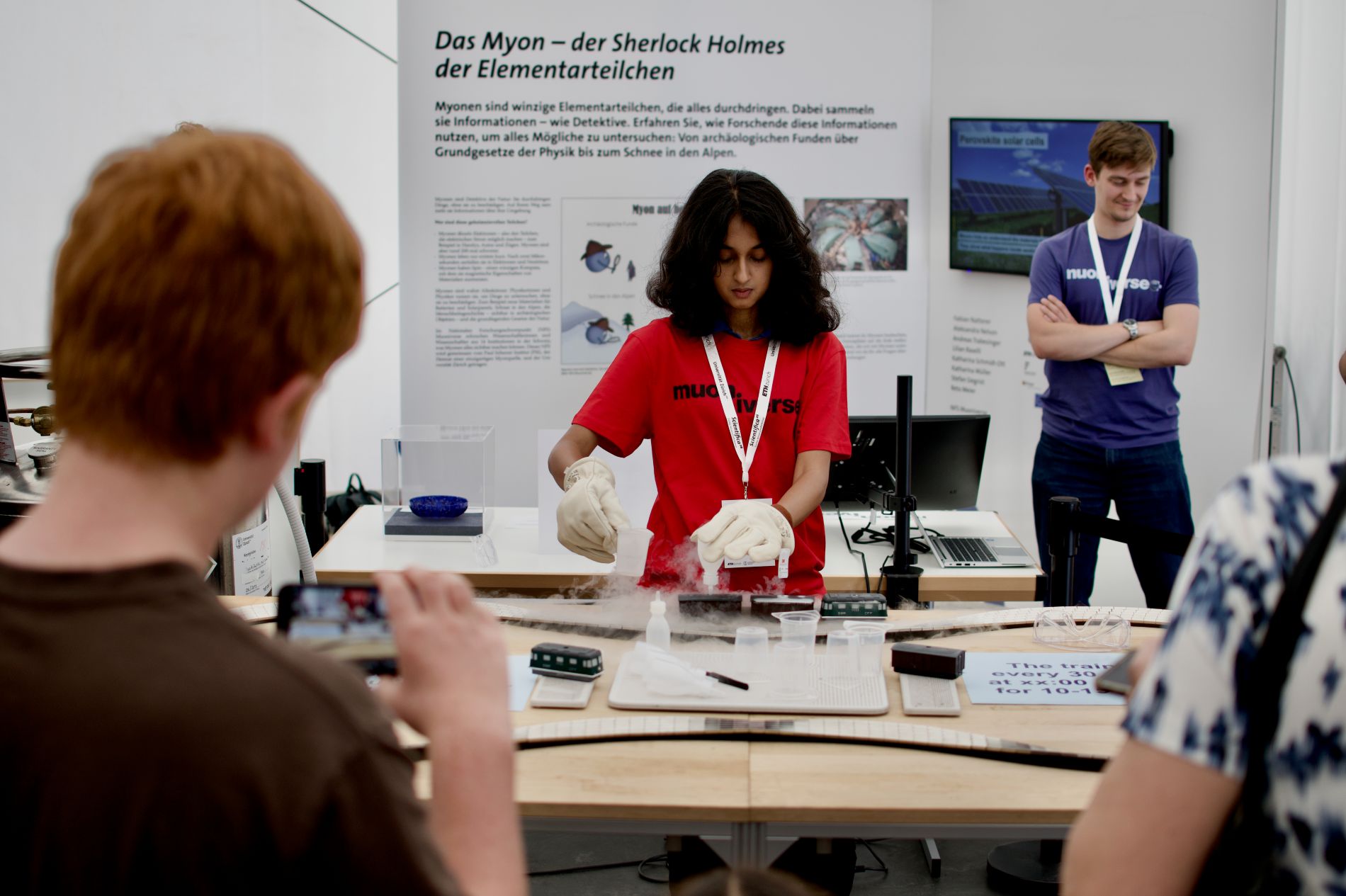
Muoniverse met the public for the first time at Scientifica. The visitors could do so much:
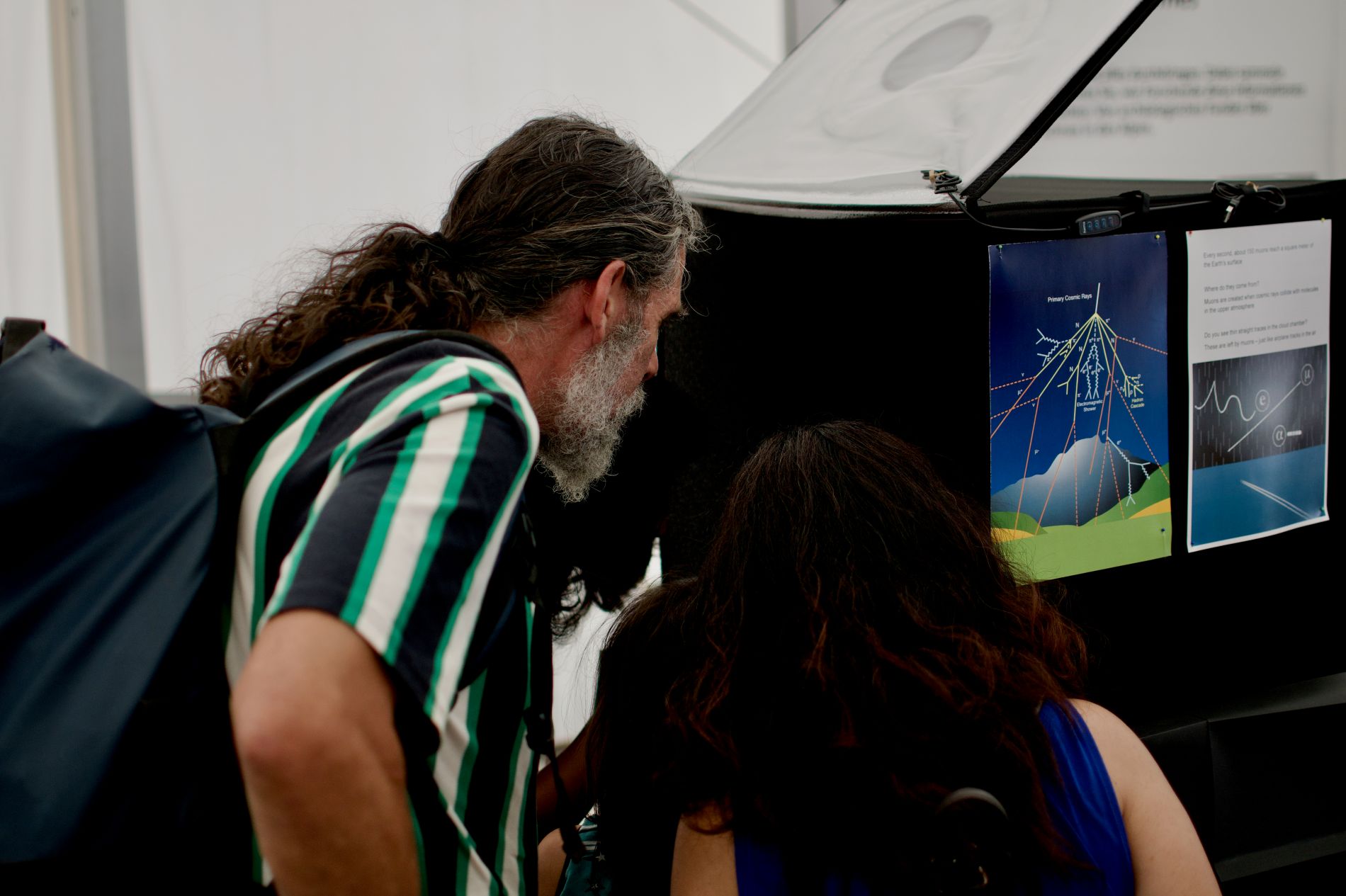
- ☁️ Catch a glimpse of cosmic muons through the traces they leave behind, as they briefly reveal their presence.
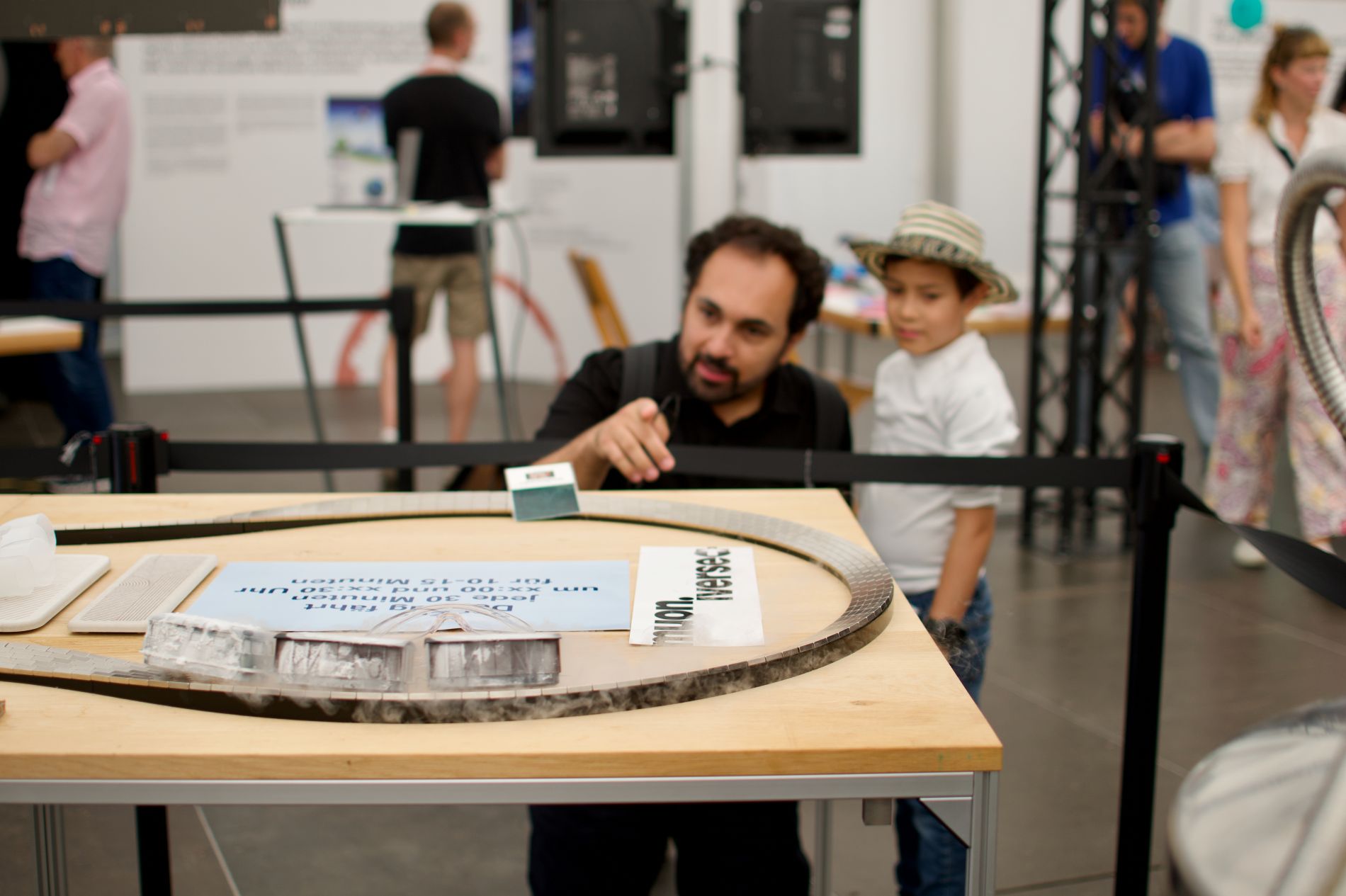
- 🚄 Watch a train levitate above its rails, powered by a superconducting material.
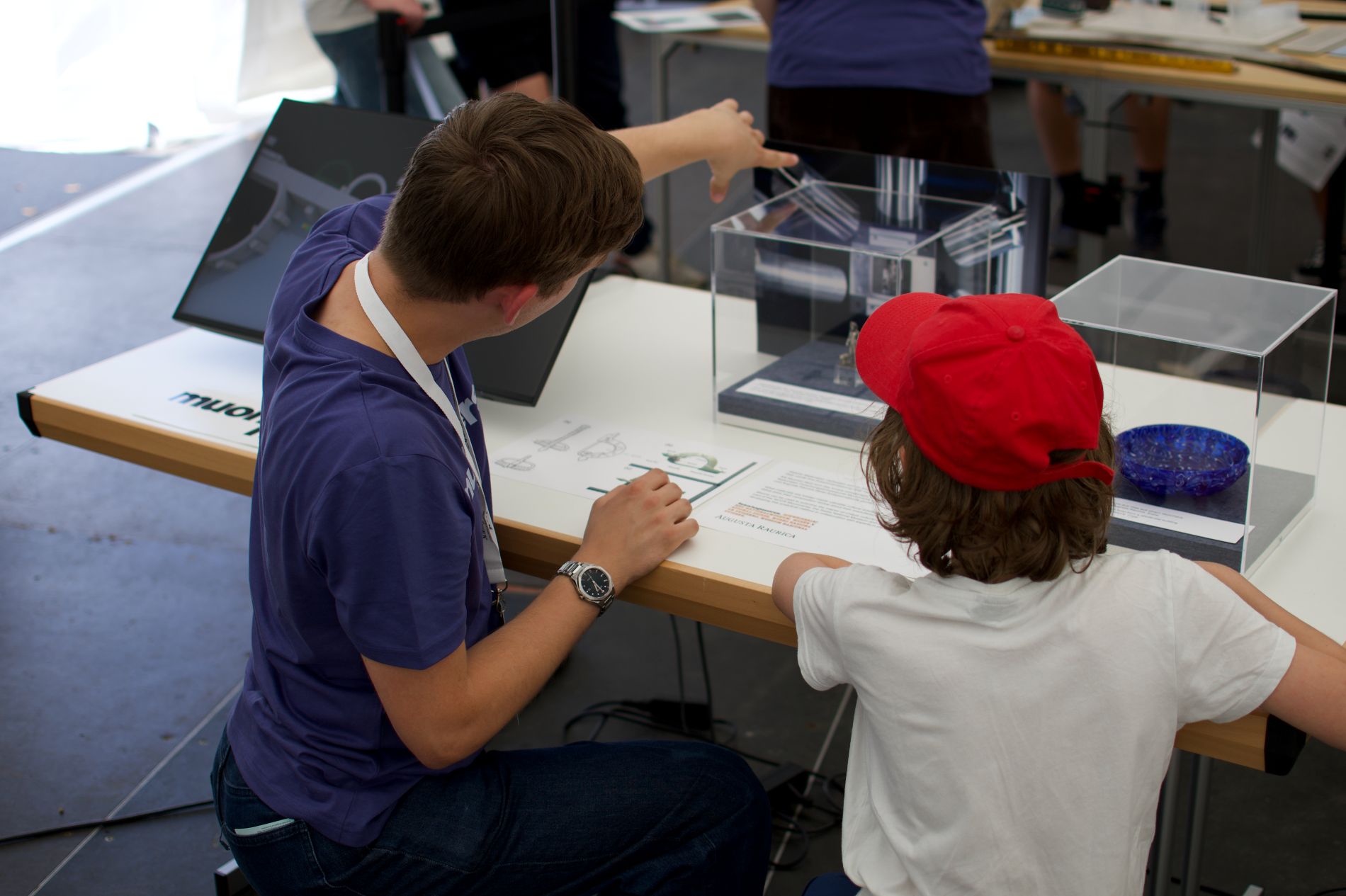
- 🏺 Admire ancient Roman artefacts and discover what lies hidden beneath their surfaces.
Over three days, our booth welcomed a remarkably diverse crowd, including children, groups of friends, prospective students, and seniors. No matter their age or background, they came with thoughtful questions:
“Can you build a real superconducting train?” “Why do muons reach us if they live so short?” “How do muons reveal elements inside objects?” “How can you see hidden structures with muons?”
These discussions showed just how surprising muons can be: particles that constantly reach us from the atmosphere, pass through thick walls, and provide information about the inside of materials. We shared our research, but we also learned from the public. Their questions challenged us to explain our science in new ways and highlighted what sparks people's imagination.
Did you know that hundreds of muons from space pass through your body every second?
They survive for only a few microseconds. So how can they travel tens of kilometres through the atmosphere before decaying? The fact that they do is a striking confirmation of Einstein's theory of relativity.
And that's not the end of their story.
Like detectives of the physics world, muons can travel through solid matter and reveal what lies hidden inside. Scientists use them to investigate everything from quantum materials and batteries to the fundamental building blocks of matter and even archaeological treasures.